As an SME retailer you may feel you’re doing your best to deliver outstanding customer experiences, but is there room for improvement? In a recent study conducted by McKinsey & Company, many businesses failed to see how improving the customer experience could create commercial value. The research revealed that improving customer experience increased sales by 2–7% and profit by 1–2%. What retailer wouldn’t want to grow revenue by up to seven per cent?
The whole question, how do we stand out, comes down to two practical disciplines: a clear customer feedback process, and a customer journey map that is measured at every stage. Most retailers do neither well, and they collect feedback only at the final touchpoint, the aftersales part of the process. A Harvard Business Review study with McKinsey found that retailers’ feedback systems were consistently disjointed from the sales journey, because they weren’t broken down into the various touchpoints the customer actually experiences.
The four phases of the journey
To analyse the customer experience properly, you need a journey map that is measured at each stage. This is the framework I use in every mystery shopping engagement, store audit, and training programme, and it has four phases.
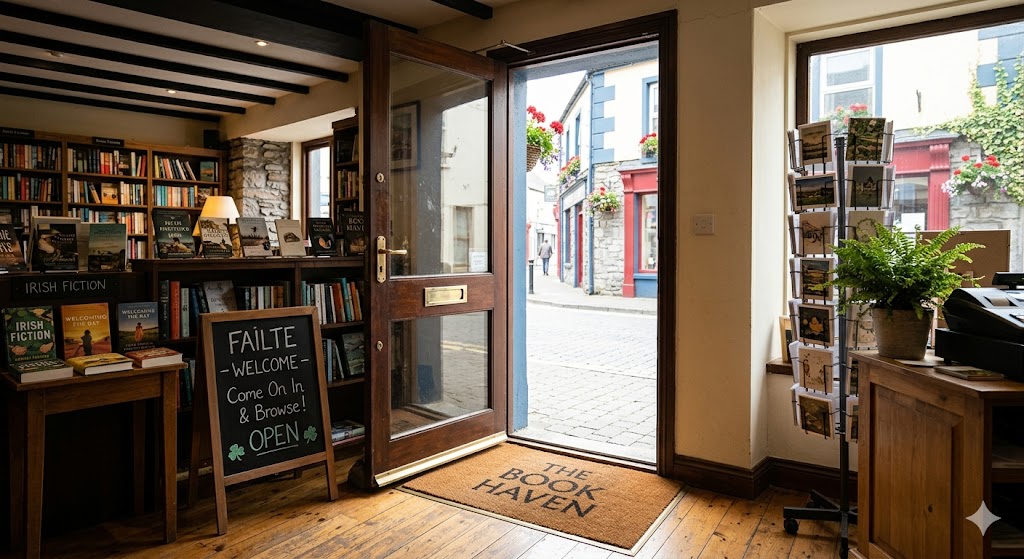
Phase 1, The Welcome phase
Brand awareness. Introduction to brand. Building rapport. First impressions. Body language. Tone of voice. The Welcome phase starts before the customer crosses the threshold and ends within the first few seconds of their arrival. This is where the team signals, unconsciously, whether this is a store worth staying in, and research on first impressions consistently shows a customer has decided inside seven to ten seconds. The most common failure here is team invisibility: staff clustered behind the counter, heads down in tasks, no acknowledgement of entry. The second is merchandising that has drifted. Both are fixable, and both need to be fixed before anything downstream works.
“The customer has decided whether they’re staying within seven seconds of walking in.”
Phase 2, The Discovery phase
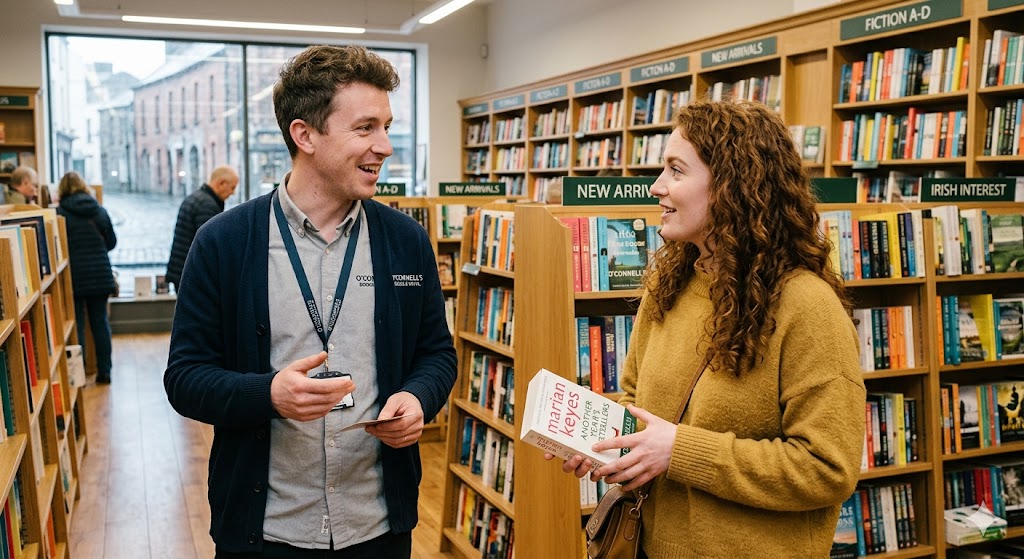
Recognising when to approach. Visual buying signals. Asking open-ended questions, sales advisor speaks 30%, customer speaks 70%. Establishing needs versus wants. Active listening. Coaching-style questions asked when interacting with the customer. Discovery is where most teams default to product, and where the best teams deliberately do not. People first, product second. This is the single largest performance-spread moment between stores, and it is the moment the coaching work focuses on hardest. Three genuinely open questions, rehearsed, measured. Not “be friendly”, too vague to act on.
Phase 3, The Buying phase
Recommendations made. Show-and-tell of products. Features and benefits. Complementary products introduced to increase average transaction spend and items per customer. The Buying phase is where the team adds real value, or fails to. Stores that train consistently on this phase see materially higher average basket values, often in the 12–18% range on comparable baskets, and higher customer satisfaction at exit. The two outcomes are linked. Customers who are shown confident, relevant recommendations feel more looked after, not less. The fear of “pushing” is almost always held by the under-trained staff, not by the customer.
“Most underperforming stores let the customer make the decision alone. The customer rarely picks the higher-value option.”
Phase 4, The Aftersales phase
Customer loyalty programme. Feedback. Lasting impression. Reviews. The Aftersales phase is the most quietly neglected of the four. The transaction completes, the customer leaves, and the team moves on. In a well-run store, the close is deliberate, eye contact, a genuine thank-you, a forward-looking line, a clear invitation to return, and where relevant, capture of CRM data that enables the next conversation. The Aftersales phase is what converts a one-time sale into a returning customer.
What most retailers get wrong with feedback
The common mistake is collecting feedback only at the end. Imagine the customers who walked in, browsed and left without buying, how do you know why? By the time they’re filling in an aftersales survey, they’re already either a buyer or gone. Feedback needs to be designed at each of the four phases, and the shopfloor team should be actively involved in gathering it. Ask them to observe customers who enter the store and note the conversations they’re having. Give them a simple 2–3 question structure to follow. Feedback collected this way changes what the next customer experiences, because it is the team who will act on it, not a dashboard.
Why this matters commercially
Customer expectations have shifted. Customers need a reason to return to a business. Although online retail has grown massively, there is still a clear place for bricks-and-mortar, and that place belongs to the smaller retailers who get the one thing larger multinationals consistently struggle with: customer experience. A recent study during Covid showed 75% of consumers changed their buying habits and up to 40% switched brands entirely. The future growth in retail will be experience-led and customer-centred, not price-led, not range-led.
What to do with this
Three things. First, ask your team to name the four phases this week, most can’t, and the conversation is useful. Second, walk your own store as a customer tomorrow morning and score each phase honestly. Third, if the gap is bigger than you thought, let’s talk. A mystery shop assessment measures each of the four phases against the framework above, and a discovery call is usually where we start.