04 · Assessments & Audits
Mystery shopping and retail audits, see exactly what’s happening in your stores.
The measurement pillar. Mystery shopping across Ireland and the UK, operational audits, and DISC leadership assessments, structured, honest, and designed so the findings can actually be used to shape training, coaching and strategy.
Book a discovery call
Why measurement matters
You can’t change what you can’t see clearly.
Most retailers have plenty of numbers. What they often don’t have is a clear, honest view of what’s actually happening at the moment of the customer interaction, the behaviour on the floor, the tone at the till, the pace of the response when a shopper is browsing alone.
Assessments are how we make that visible. Not to catch people out, and not to generate a score for its own sake, but to create a clear baseline that training, coaching and operational changes can genuinely improve against.
This pillar runs as a standalone engagement, as a recurring measurement rhythm (quarterly mystery shops, for example), or as the diagnostic front-end of a larger programme alongside Consulting.
What’s included
Four assessment formats.
Mystery shopping, full customer journey
Structured, realistic visits by trained shoppers using a four-stage methodology (see below). Each visit is scored against a behaviour-based framework and written up in the shopper’s own words, so the report reads like a customer experience, not a compliance tick-list.
Store & operational audits
In-store reviews of visual merchandising, stock flow, queue management, housekeeping, team presence and the operational rhythms that underpin the customer experience. Paired with manager interviews for the full picture.
Leadership capability assessments (DISC)
DISC psychometric profiling for individual leaders and leadership teams, used to map communication styles, friction points, and development priorities. Always debriefed 1:1 so the profile becomes a development tool, not a label.
KPI & performance review
Quantitative analysis of the trading metrics that matter to the engagement, conversion, UPT, ATV, mystery-shop scores, staff costs, customer-feedback scores, cut in ways your standard report probably doesn’t.
Methodology
The four-stage mystery shop.
Most mystery shop programmes produce compliance scores. This one produces behaviour insight. Every shop is structured around the four moments where a customer experience is made or broken, so the output is usable by training, not just reporting. Read a full breakdown of how the framework works →
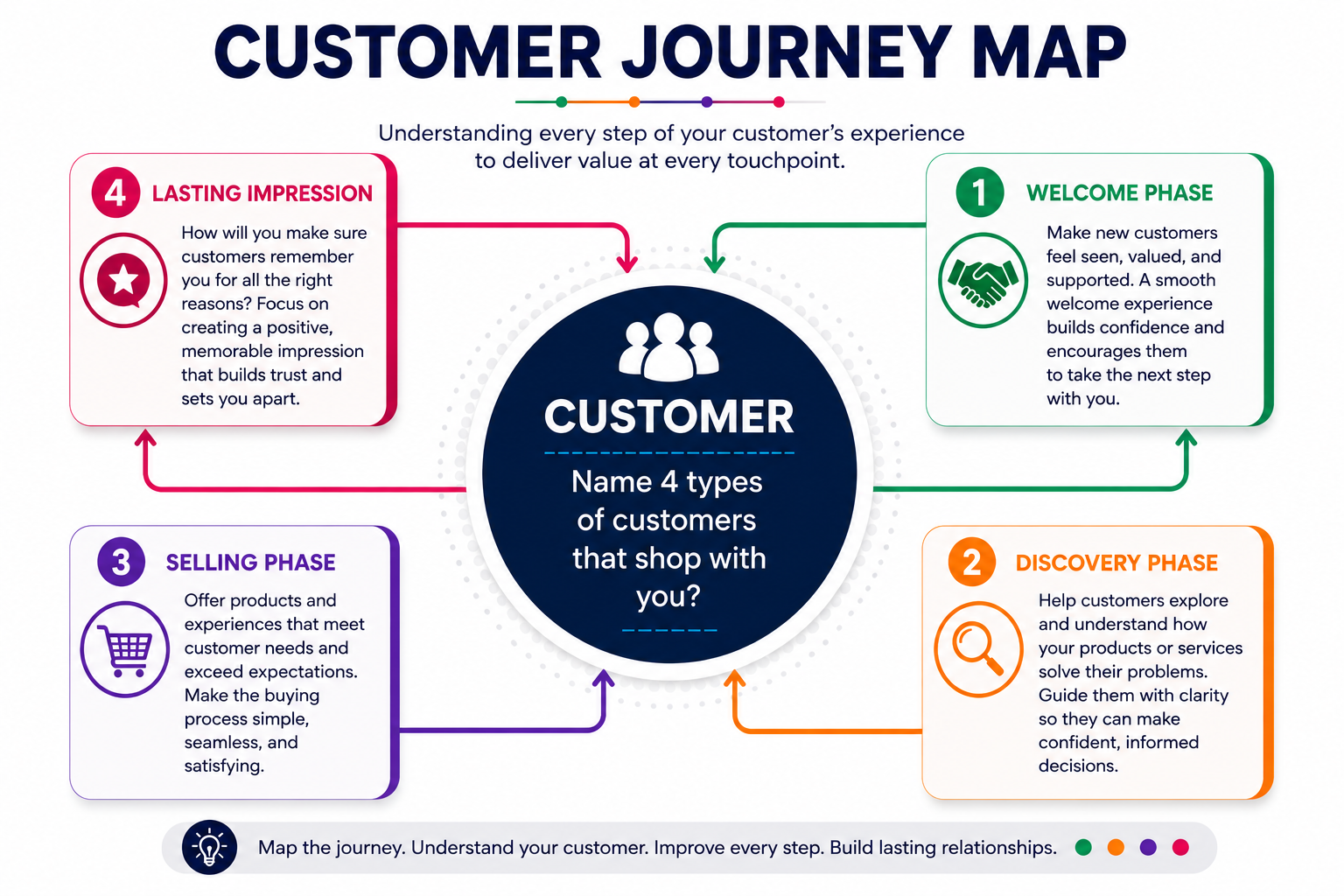
Arrival & welcome
The first 30 seconds, how quickly is presence acknowledged, what’s the tone, does the store feel ready for a customer? This is where repeat-visit intention is quietly decided, long before the transaction.
Discovery & engagement
How the team reads the shopper, the questions asked, the product knowledge demonstrated, the recommendations made. The moment where a browser becomes a buyer, or doesn’t.
Transaction & add-on
The till experience, the add-on offer, the sign-up, the service. Often treated as a transaction, in practice, the single highest-density moment of the visit for both brand and revenue.
Departure & intent to return
The final seconds. The acknowledgement, the goodbye, the store’s last impression. Shoppers leave with either a specific intent to come back, or without one. This stage makes the difference.
“A mystery shop report that ends with a score is a report. A mystery shop report that ends with a conversation is a tool.”
What you leave with
Outputs designed to be used.
A baseline you can trust
Specific, behaviour-level measurement of where each store is today, not a score-out-of-ten, but a map of what’s happening at each of the four stages.
Individual-level insight
Feedback structured to flow directly into 1:1 coaching conversations with managers, confidential, behavioural, and framed developmentally rather than punitively.
A measurable re-shop
A follow-up round after the training and coaching work, same framework, same stores, so the change is measured in behaviour, not self-report.
Who it’s for
When Assessments is the right pillar.
A good fit if…
- You want an honest, behaviour-level picture of the customer experience in your stores.
- Your current mystery-shop provider produces compliance scores but not usable insight.
- You need a baseline before starting a training programme, so you can measure change.
- You’re profiling a leadership team and want DISC debriefs that actually develop people.
- You want a quarterly measurement rhythm that keeps standards honest between training cycles.
Probably not a fit if…
- You want a pure “gotcha” audit to support disciplinary action. The methodology is designed for development.
- You want a cheap online panel producing hundreds of low-quality shops. This is done by trained shoppers.
- You’re not prepared to do anything with the findings. Without action, measurement is noise.
Keep exploring
The other three pillars.
Strategic consulting for retail performance.
The diagnostic pillar. Store audits, customer journey mapping, KPI analysis and a prioritised improvement plan.
Read more 02 / Team SupportShopfloor coaching that builds real capability.
In-environment training for store and area managers, applied on the floor, during trading.
Read more 03 / Ongoing CoachingCoaching that embeds change over time.
Structured 1:1 and team coaching to turn capability into habit, so the change doesn’t leave with me.
Read more
Let’s start
See what’s really happening in your stores.
Thirty minutes on Zoom to talk about what you want to measure, and which format of assessment would actually tell you what you need to know.
Book a discovery call