

Ask any retail manager how their last round of performance reviews went, and you’ll usually hear some variation of the same answer: “fine, I think, got them done.” Ask any team member the same question, and you’ll hear something different: the review was a form they signed, a conversation they’ve already forgotten, and a rating that doesn’t quite match the one they’d give themselves. Nothing about what they do next week will change because of the review they just had. That is the failure mode at the centre of retail performance management, and it is almost universal.
Why the ritual persists
Reviews persist because they serve a compliance function. HR needs documentation. The business needs evidence of a managed workforce. Once a year, the calendar comes round, the template gets sent, and the ritual is performed. The problem is that the ritual has become the point, the conversation itself is secondary to the paperwork. No behaviour changes because no behaviour is meant to change. The review is a record, not a catalyst.
This is compounded in retail by the operational pressure of the environment. Reviews happen between trading peaks, in back offices, sandwiched between other priorities. The manager conducting the review is often exhausted. The team member receiving it is often underprepared. The conversation gets through the form and stops. What’s missing isn’t effort, it’s structure that makes the conversation actually change something.
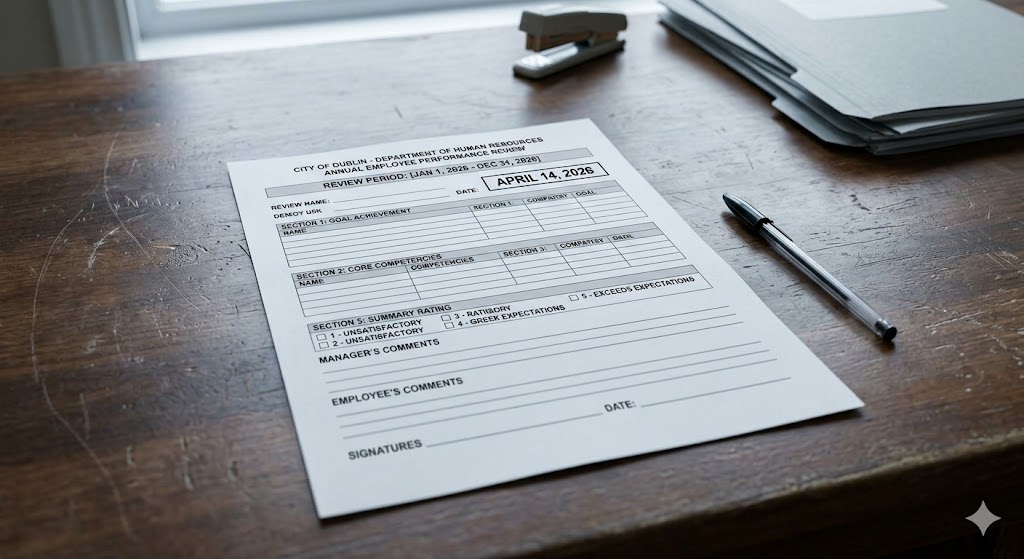
Three failure modes
When I audit performance review practice across a retailer, the same three failures tend to show up together. Naming them is the first step to fixing them.
1. Vague feedback
The single most common failure. “You’ve had a good year.” “You need to be more proactive.” “Customer service is an area to focus on.” These sentences feel like feedback but behave like noise. The team member cannot act on them because they don’t point to anything specific. Vague feedback exists because specific feedback is uncomfortable, it requires the manager to have paid attention to specific moments, and to name them out loud. Most reviews skip the discomfort and stay general. The cost is that the conversation teaches nothing.
“Vague feedback feels generous. It is actually the most expensive kind of feedback a manager can give.”
2. No follow-up
Whatever is agreed in the review is almost never revisited. The form is signed, filed, and forgotten. Twelve months later, the next review begins with a fresh list of themes, and the team member quickly learns that what gets said in the room doesn’t get tracked outside it. This single pattern is what makes most teams treat reviews as theatre. They know nothing will follow.
3. No coaching capability
Even when feedback is specific and follow-up is planned, most managers lack the coaching skill to convert the insight into changed behaviour. Telling someone what to do differently is not the same as helping them do it differently. The first is a statement; the second requires questioning, observation, practice, and in-environment support. Most retail managers have never been trained in the second, and so the gap between the review and the change remains unbridged. Part of what closes it is lending belief to the manager until they can hold the coaching role themselves.
What works instead
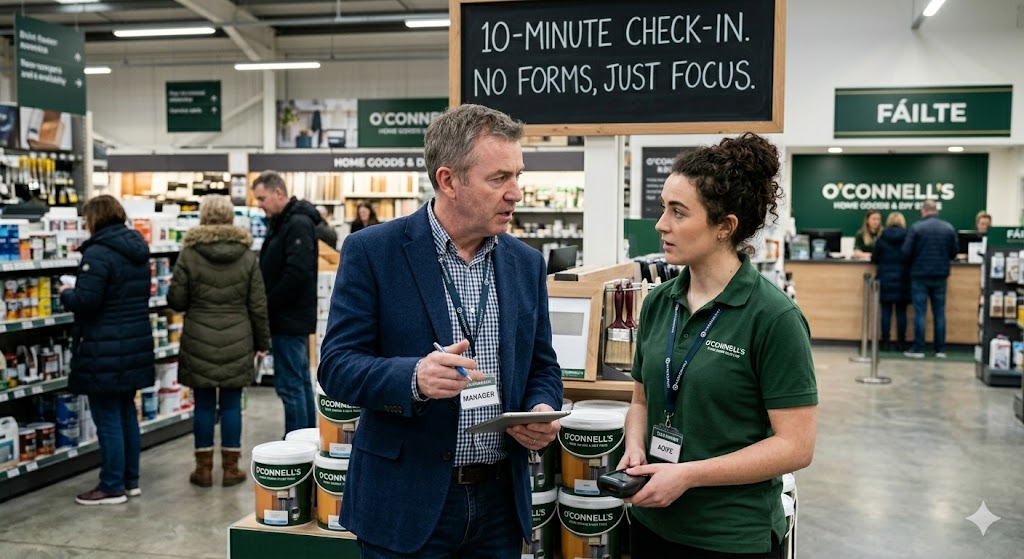
Shift the entire model from annual ritual to continuous rhythm. The annual review stays, but it becomes a summary rather than the event. The real work happens in monthly or fortnightly shopfloor conversations, short, specific, behavioural. “I watched you handle the late Saturday rush. Here are two things that worked. Here is one thing to try differently this week.” That conversation, repeated twelve times a year, does more for capability than any annual form.
This requires three changes from the leadership side. First, specificity: managers need to watch more and name what they see. Second, cadence: a regular rhythm of short check-ins replaces the single long one. Third, coaching skill: managers need to be developed as coaches, not just reviewers. This last one is usually the bottleneck, it’s where the ongoing coaching pillar of my work does its heaviest lifting.
“The best review is the one where nothing in it is a surprise to either side.”
What to do this week
Before the next formal review cycle, try one thing. Pick two team members. Watch each of them for fifteen minutes on the shopfloor. Write down two specific moments, one that worked, one that could shift. Have a ten-minute conversation about those four observations. Do this for two weeks. You’ll see more change in behaviour than the last annual review produced. And you’ll have built the foundation for a different kind of review when the calendar next comes round.
If the gap is bigger than that, if the review culture itself needs re-designing, it usually starts with a team support engagement, a discovery call, or both.